





Table of Contents
ToggleArrow blocks are among the most common, and sometimes most frustrating, puzzle mechanics in Hogwarts Legacy. Whether you’re hunting for rare gear, Galleons, or just trying to complete the Merlin Trials, you’ll run into treasure vaults that demand you manipulate directional blocks to unlock their secrets. If you’ve stared at these rotating arrows thinking “what now?” you’re not alone. This guide breaks down exactly how arrow block puzzles work, where to find them, and how to solve them efficiently from your first playthrough to endgame treasure hunts.
Key Takeaways
- Arrow block puzzles in Hogwarts Legacy require rotating directional blocks to match specific patterns, with three main puzzle types: all-same-direction, flow circuits, and grid alignment patterns.
- Effective arrow block puzzle solving relies on observation and pattern identification before rotating blocks—stand back, study the vault layout, and look for reference images carved into walls or floors.
- Early vaults demand simple solutions where all blocks point the same direction, while mid-game and expert vaults in areas like the Forbidden Forest combine multiple pattern types and require systematic, methodical approaches.
- Revelio and Lumos spells improve visibility in dark vaults, but arrow block puzzles are intentionally spell-proof, ensuring logic-based problem-solving remains the core challenge regardless of your magical abilities.
- Treasure vaults reward your puzzle-solving efforts with Galleons (200-5,000+), legendary gear with unique properties, spell upgrades, and collectibles that scale in quality with puzzle difficulty.
What Are Treasure Vault Arrow Blocks?
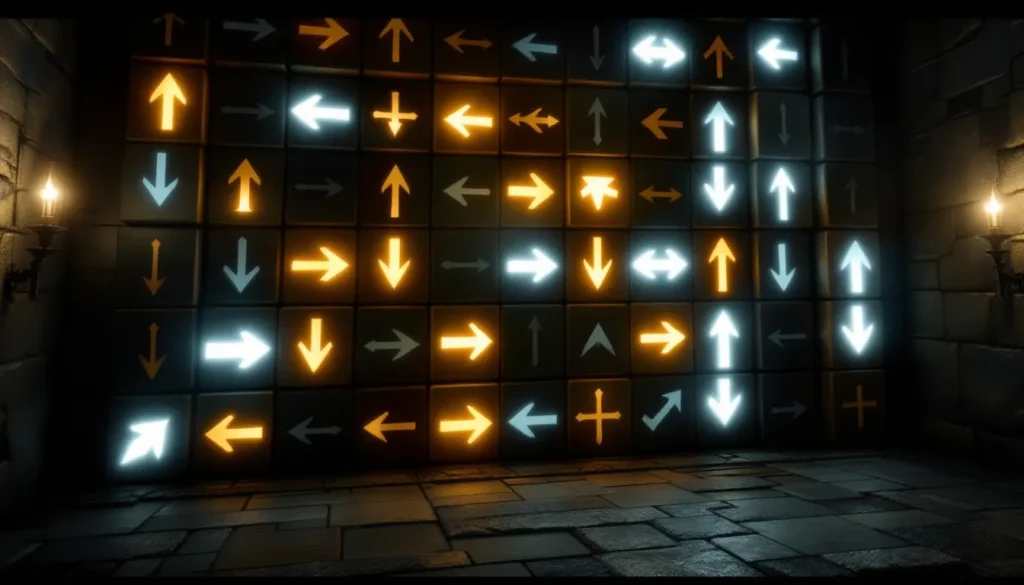
Arrow blocks are puzzle elements that appear inside treasure vaults throughout Hogwarts Legacy. They’re stationary or interactive blocks marked with directional arrows (pointing up, down, left, or right) that must be aligned in a specific pattern to unlock a door, chest, or magical barrier. Think of them as a Hogwarts take on classic sliding puzzles, except instead of moving blocks around, you’re rotating them or activating them in the correct sequence.
The core mechanic revolves around matching arrow directions to complete a circuit or pattern. Some vaults require you to point all arrows in the same direction. Others demand a specific sequence where arrows create a “flow” from entrance to exit. The difficulty scales significantly throughout the game, starting with single-row solutions early on and escalating to multi-layered logic puzzles in late-game content.
What makes these puzzles interesting is that they’re separate from combat entirely, they’re pure problem-solving. You won’t need spells or damage output to crack them: you’ll need patience, observation, and a bit of trial-and-error testing.
Where To Find Treasure Vaults With Arrow Block Puzzles
Arrow block puzzles appear in treasure vaults scattered across every region of Hogwarts and the surrounding areas. You won’t encounter them in combat encounters or story sequences, they’re exclusively hidden inside vaults marked on your map or found through exploration. Once you’re past the early tutorial zone, arrow blocks become a consistent feature.
Notable Locations Across Hogwarts and Beyond
The Undercroft is one of the first places you’ll see arrow block puzzles. The vaults here are beginner-friendly and serve as a training ground for understanding the mechanic. Moving upward in difficulty, the Ravenclaw Tower, Slytherin Dungeon, and Hufflepuff Basement all contain multiple arrow block vaults with moderate complexity.
The Hogsmeade region has several standalone vaults scattered across the village and surrounding grounds. These tend to be mid-game difficulty and reward decent loot. The Forbidden Forest and Feldcroft Region house some of the most challenging arrow block puzzles in the game, often guarded by high-level enemies nearby and featuring multi-step solutions.
For completionists, the Merlin Trials scattered across the map frequently involve arrow block puzzles as their primary challenge. Solving these trials is part of the unlock path for certain fast-travel points and rewards. The South Sea Bog and North Ford Bog areas contain end-game vaults with expert-level arrow block configurations. Finally, keep an eye on your map for vault markers, they’re the most reliable way to locate new arrow block puzzles in any region you haven’t fully explored yet.
How Arrow Block Mechanics Work
Understanding the underlying mechanics is crucial before attempting to solve these puzzles. Each arrow block functions on a simple principle: it can point in one of four cardinal directions, and the goal is to align all blocks to match a specific pattern shown by the puzzle itself.
Direction and Rotation Systems
Every arrow block has exactly four possible states: pointing up, right, down, or left. Most arrow blocks can be rotated manually by walking up to them and using a contextual interaction prompt (usually the interact button you use for doors and chests). Each button press rotates the block 90 degrees clockwise. Some advanced puzzles feature blocks that rotate counterclockwise or blocks that lock in place once aligned correctly.
The visual feedback is straightforward, the arrow on the block visually rotates to show you which direction it’s pointing. Pay attention to the block’s exact orientation: a slight visual difference can mean the puzzle won’t solve even if you think you’ve got it right.
In rare cases, puzzle blocks are interactive only once or twice before locking. This is usually telegraphed visually, locked blocks often have a different texture or glow. Always test a puzzle setup if you’re unsure whether blocks are locked or not. Most vaults allow unlimited rotation attempts without penalty, so experimentation is safe.
Common Puzzle Patterns and Logic
The most basic pattern is the “all same direction” puzzle. All arrow blocks must point in the same direction, usually up or toward the locked door. These appear frequently in early vaults and are straightforward: check which direction is most common, then rotate everything to match.
The “flow” or “circuit” pattern is more complex. Arrows must create a continuous path from the entrance to the exit. If you imagine each arrow as directing energy or light through the puzzle, the path must connect without gaps. A block pointing up, a block pointing right above it, another pointing down on the right, these create a connected flow. Missing connections or circular loops that don’t reach the goal will keep the puzzle unsolved.
Some vaults use a “grid alignment” pattern where blocks are arranged in rows or columns, and specific rows or columns must match a reference pattern. These often have a visual clue shown on the vault wall or nearby.
Rarer still are “sequence puzzles” where you activate blocks in a specific order rather than rotating them all at once. Walking up to blocks in the correct sequence triggers the unlock. These are less common but memorable once you encounter one. Always look for numbered indicators or visual cues that suggest a sequence exists.
Step-By-Step Strategies for Solving Arrow Block Puzzles
Solving these puzzles efficiently comes down to methodology. Rushing leads to mistakes: a systematic approach solves them faster overall.
Early-Game Arrow Blocks (Beginner Difficulty)
When you first encounter arrow block vaults, start by observing before touching anything. Stand back and look at all the blocks together. Count how many point in each direction. If seven blocks point up and one points right, the solution is likely to rotate that one block up.
For single-row or two-row puzzles, the solution is almost always “all blocks point the same direction.” Rotate each block to match the majority and test. If the vault doesn’t unlock, try a different direction, you only need to test four possibilities.
Don’t overthink early vaults. These are designed to teach you the mechanic, not frustrate you. If you’re stuck for more than a minute, you’ve probably already solved it and just need to check the last block again.
Mid-Game and Advanced Puzzles
Once past the first region, puzzles become more intricate. Now you need to map out the pattern before rotating blocks. Mentally trace what a completed puzzle should look like. If a vault has blocks arranged in a square, consider whether all sides must point inward or outward. Some vaults have a reference image carved into the floor or wall, study it carefully.
For flow puzzles, trace the path with your eyes from the start point to the end point. Mark which blocks are already correctly oriented. Rotate only the misaligned blocks. This saves time and reduces mistakes.
If a puzzle seems impossible, reset your mental model. Maybe you’re overcomplicating it. Try the simplest solution first: all pointing same direction, then try flow patterns, then grid alignment. Most mid-game puzzles use only one of these three pattern types.
A critical tip: if you’ve rotated blocks and nothing happens, double-check the reference image or pattern. Sometimes the solution isn’t obvious from the block layout alone, the vault’s visual design hints at it.
Expert-Level Solutions and Hidden Vaults
End-game vaults demand careful observation and sometimes multiple attempts. These puzzles often combine multiple pattern types or use blocks that are positioned unintuively. Before rotating anything, take a screenshot or write down the starting state of each block. This lets you reset mentally if you’ve made errors.
Some expert vaults have red herring blocks, blocks that look important but aren’t actually part of the puzzle. These can mislead you into spending time on incorrect patterns. Focus on blocks closest to the vault door or the ones most visually emphasized.
If a puzzle truly stumps you, rotate blocks systematically: after solving one block, move to the next, testing incrementally. It’s slower but guarantees you’ll find the pattern. Expert puzzles in high-level areas like the Forbidden Forest can take 5-10 minutes of methodical work, but they always have a logic-based solution, no guessing required.
Hidden vaults often have additional complexity: multiple puzzle chambers or blocks that must be solved in a specific sequence. These are rare and only appear in end-game content. When you find them, take extra time observing the vault layout before committing to rotations.
Spells and Tools That Help With Arrow Block Puzzles
While arrow block puzzles are primarily logic-based, a few spells and tools can make the process smoother. Revelio is invaluable, it highlights interactive objects and reveals hidden puzzles within vaults. If you’re struggling to find arrow blocks in a poorly lit vault, casting Revelio illuminates them instantly and shows their current orientations more clearly.
Lumos serves a similar purpose in darker vaults, casting light so you can see the arrow directions without squinting. Not a game-changer, but useful quality-of-life improvement.
Some players use Bombarda to destroy environmental clutter blocking their view of arrow blocks, though most vaults are designed with good sightlines. Diffindo can cut away hanging obstacles for better visibility.
Importantly, no offensive or defensive spell affects puzzle-solving directly. You can’t use magic to rotate blocks faster or unlock vaults without solving them, these puzzles are intentionally spell-proof. This is actually good design, as it ensures arrow block puzzles remain a skill-based challenge regardless of your spell loadout.
The most useful “tool” is actually your camera control. Rotating your view angle often reveals block orientations that are ambiguous from certain angles. If you’re confused about a block’s direction, move around the vault and view it from different perspectives.
Common Mistakes and How To Avoid Them
Mistake #1: Assuming all blocks must rotate. Some puzzles include stationary blocks or blocks that are already correctly oriented. Rotating everything wastes time. Check each block’s orientation carefully, if it already matches the pattern, leave it alone.
Mistake #2: Rotating blocks without understanding the target pattern. This is the “spray and pray” approach. You rotate blocks randomly hoping something clicks. Instead, observe the puzzle first. Is there a reference image? Are blocks arranged in a recognizable pattern? Once you understand the goal, solving becomes logical rather than random.
Mistake #3: Missing the reference pattern. Some vaults carve or paint the solution directly on the floor or walls nearby. If you’re stuck, step back and look at the entire vault. The answer is often hiding in plain sight.
Mistake #4: Confusing similar-looking block positions. In large vaults with many blocks, it’s easy to rotate the wrong block thinking you’ve rotated another. Count blocks carefully or rotate clockwise through them systematically to avoid confusion.
Mistake #5: Giving up after a few attempts. Arrow block puzzles always have a solution. If you’re stuck, you haven’t found the right pattern yet. Take a break, come back fresh, and reconsider your assumptions. Sometimes the simplest explanation is correct.
Mistake #6: Ignoring visual cues. Blocks colored differently, positioned uniquely, or glowing distinctly are often highlighting important pieces of the puzzle. Pay attention to these visual signals.
Mistake #7: Overlooking sequence puzzles. If rotating blocks doesn’t unlock the vault, the puzzle might require activating blocks in a specific order. Look for numbered cues or a logical sequence based on the puzzle’s layout.
Tips for Efficiency and Speed-Running Arrow Block Puzzles
If you’re tackling multiple vaults in one session or attempting a speed-run, efficiency matters. Develop a mental framework: assess the puzzle type within 10 seconds, identify the pattern within 30 seconds, execute the solution within 1-2 minutes.
Tip #1: Categorize immediately. As soon as you enter a vault, ask: “Is this an all-same-direction puzzle, a flow puzzle, or something else?” Most vaults fall into these three categories. Narrowing it down accelerates solving.
Tip #2: Use the majority rule. Count blocks by direction. The direction with the most blocks is often the correct direction for all-same-direction puzzles. This eliminates three of four possibilities instantly.
Tip #3: Trace paths quickly. For flow puzzles, use your cursor or focus point to trace from start to end. This takes seconds and immediately shows you which blocks are misaligned.
Tip #4: Rotate in batches. Instead of rotating each block individually, stand in the center of the vault and rotate blocks in a circle around you. This movement pattern is faster than running between blocks scattered across the vault.
Tip #5: Memorize block positions. In large vaults, assign each block a position name (top-left, middle-right, etc.). This prevents confusion and speeds up communication if you’re playing co-op or following a guide.
Tip #6: Learn to identify unsolvable states. If you notice a pattern that can’t possibly work (like a disconnected flow circuit), don’t waste time rotating, reset your mental model immediately.
Tip #7: Don’t reset unnecessarily. Once a block is correctly rotated, leave it. Resetting one block means you might rotate it wrong again. Commit to solutions once you’ve identified them.
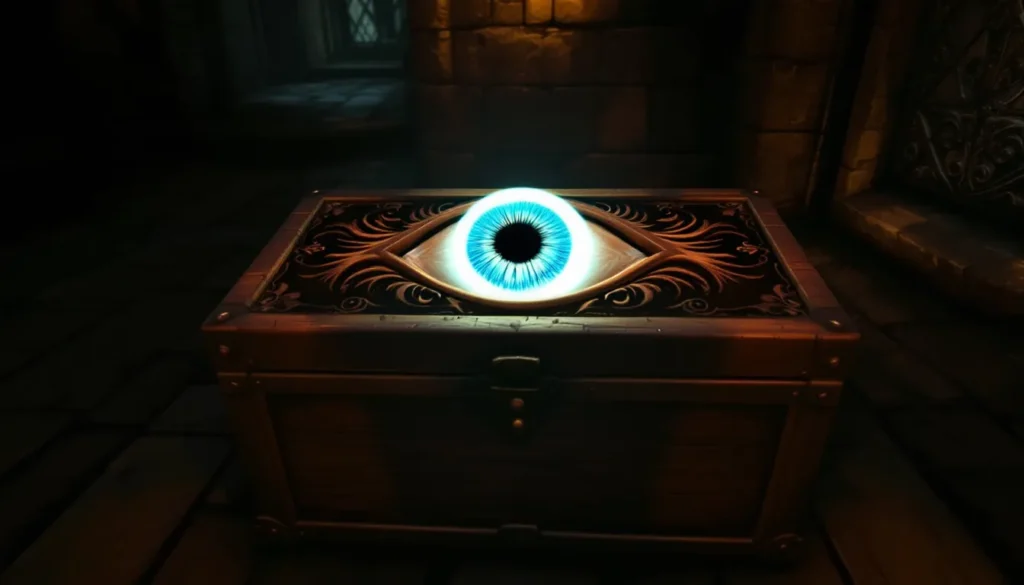
For context on similar mechanical puzzles in Hogwarts Legacy, check out guides on how to open Eye Chest Hogwarts Legacy to understand how Hogwarts Legacy puzzle design works across different vault types. The logic-based problem-solving translates well between different vault mechanics.
Rewards and Loot You Can Expect From Arrow Block Vaults
Solving arrow block puzzles is always worth the effort. Vaults aren’t cosmetic, they contain tangible rewards that improve your character and arsenal.
Galleons are the most common reward. Early-game vaults yield 200-500 Galleons: mid-game vaults typically contain 500-1,500 Galleons: end-game vaults can hold 2,000-5,000+ Galleons. These are crucial for buying gear from shops and upgrading your equipment.
Legendary Gear appears in high-level vaults. These items have unique properties and superior stats compared to standard gear. Legendary robes, weapons, and accessories often have special effects that enhance specific playstyles, look for gear that matches your preferred build.
Spell Upgrades and Mats are sometimes included. Vaults occasionally contain the materials needed to upgrade spells or unlock new capabilities. These are especially valuable in mid-game when you’re still expanding your magical arsenal.
Dark Magic Attributes appear in vaults guarded by dark witches or wizards. These are special items or enchantments that enhance dark magic spells. If you’re specializing in Unforgivable Curses, these vaults are particularly rewarding.
Field Guides and Collectibles round out the loot table. Completing vaults sometimes awards Field Guide pages for creatures in the region, treasure chest entries, or other lore items that contribute to 100% completion.
The reward quality scales with puzzle difficulty. Basic “all arrows point up” vaults yield basic rewards: expert multi-stage puzzles in the Forbidden Forest yield rare legendary gear. Plan your vault-hunting route around which rewards you need most.
For a broader understanding of Hogwarts Legacy’s treasure system, exploring the Hogwarts Legacy Butterfly Mirror puzzle mechanics shows how various vault types reward different loot tiers. Similarly, if you’re interested in optimizing combat between vault runs, Hogwarts Legacy spell combos provide tactical advantages that make clearing enemy-guarded vaults faster.
For players seeking comprehensive coverage of all Hogwarts Legacy mechanics and guides, the Hogwarts Legacy Archives maintains an extensive collection of puzzle solutions and tips. External resources like Game8’s comprehensive guides offer additional strategies, tier lists, and builds if you want broader context on optimizing your playthrough. RPG Site’s detailed walkthroughs also provide step-by-step solutions for particularly challenging vaults.
Conclusion
Arrow block puzzles in Hogwarts Legacy are deceptively simple on the surface but offer satisfying depth as difficulty escalates. Whether you’re a casual explorer grabbing quick loot or a completionist hunting every vault, the core strategy remains consistent: observe, identify the pattern, execute methodically. Early vaults teach the mechanic: mid-game puzzles demand careful observation: end-game vaults reward patience and logical thinking.
Remember that there’s no time pressure. Unlike combat encounters, arrow block puzzles let you experiment freely. Take your time understanding the pattern, rotate blocks confidently once you’ve identified the solution, and don’t hesitate to step back and reassess if you’re stuck. Every puzzle has a logical solution, some just require more lateral thinking than others.
As you progress through Hogwarts Legacy and encounter increasingly complex vaults, the skills you develop solving early arrow block puzzles translate perfectly to the challenge ahead. The rewards are worth the mental effort, and the satisfaction of cracking a particularly devious puzzle never gets old. Whether you’re farming Galleons, hunting legendary gear, or pursuing 100% completion, mastering arrow block puzzles is an essential part of the Hogwarts Legacy experience. Get out there, start exploring those vaults, and unlock the magic waiting inside.